
Flat Roof Maintenance for GTA Homes and Small Buildings
Practical, local guidance for homeowners and small buildings in Toronto and surrounding areas.
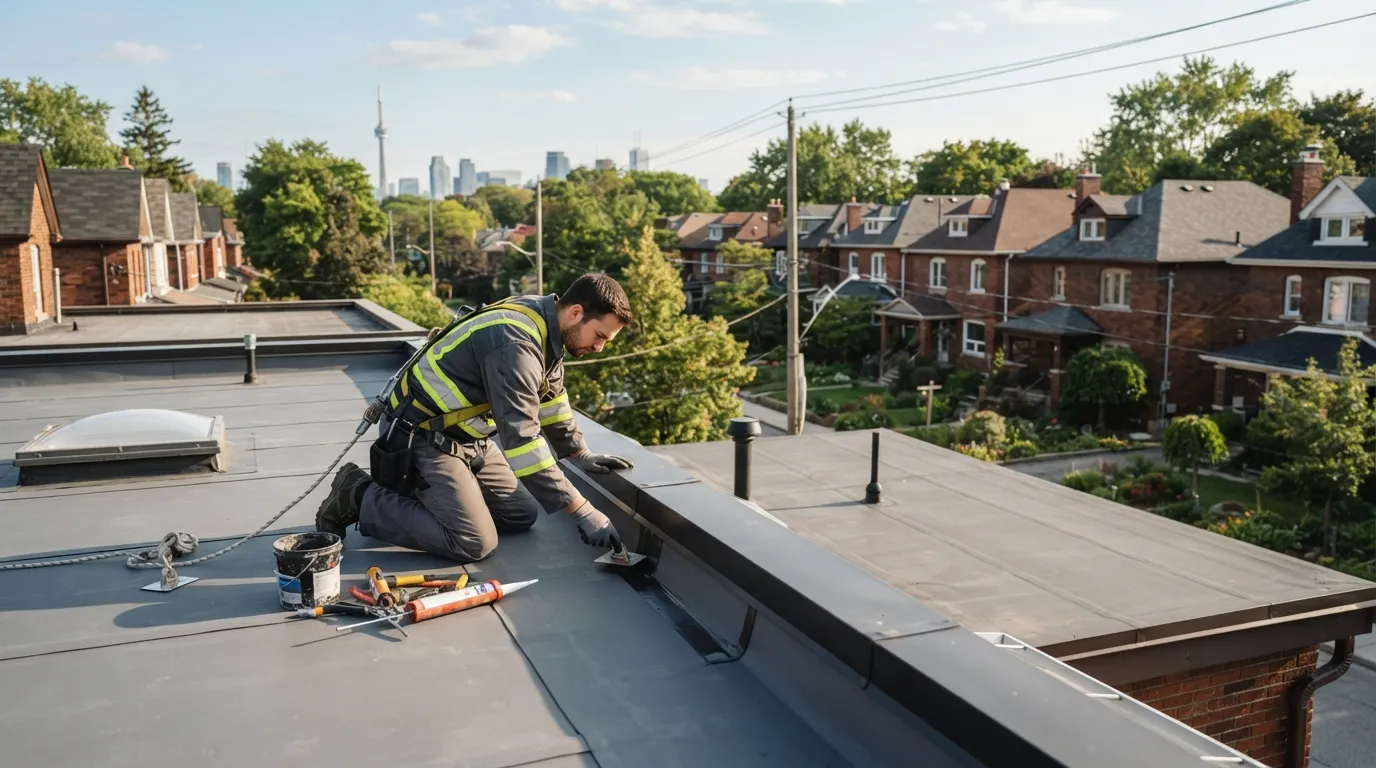
What is the simplest answer to maintaining a flat roof in the GTA?
Keep drains clear, inspect seasonally (spring and fall), manage ponding water, repair flashings and seams promptly, and hire a qualified roofer for major defects — that combination prevents most leaks and extends service life.
What we mean by “flat” roof
Most so-called flat roofs have a low slope (1/4 to 2 degrees) rather than perfectly horizontal. Common coverings include built-up roofing (BUR), modified bitumen, EPDM rubber, TPO, and PVC. Each material has different failure modes and maintenance needs — know what your roof is made of before you start work.
Key components to watch
Drains, scuppers, gutters, flashings, edge metal, seams, and rooftop equipment (HVAC, vents) are the most common trouble spots. Water should flow to drains without pooling; seams and flashings should remain adhered and crack-free. Regular checks of these parts catch small issues before they become interior damage.
Why Toronto’s climate matters
Greater Toronto’s freeze-thaw cycles, heavy spring rains, and occasional summer storms stress roof membranes and flashings. Snow loads and ice dams can lead to ponding and clogged drains if not managed. Local municipal codes and insurance practices in Toronto, York Region and nearby Mississauga can affect repair and replacement processes, so verify specifics with your insurer and building department.
Step-by-Step: Flat Roof Maintenance for GTA Homes and Small Buildings
A seasonal routine and some event-driven actions keep a flat roof healthy. Follow these practical steps for inspections, minor repairs, and when to involve a contractor.
- 1
1. Identify the roof type and access safely
Confirm whether your roof is BUR, modified bitumen, EPDM, TPO or PVC — look at records or have a pro inspect. Use safe access (ladder tied off, hard hat, non-slip shoes) and never work alone on a roof you’re not comfortable on; consider hiring a technician for high or difficult roofs.
- 2
2. Clear drains, scuppers and gutters
Remove leaves, gravel, and debris from surface drains and make sure scuppers and downspouts are free-flowing. For rooftop internal drains, check strainers and test flow with water; slow drainage indicates partial blockages that should be cleared before significant rain arrives.
- 3
3. Look for ponding, blisters, and seam separation
After rainfall, inspect for standing water that remains more than 24–48 hours — this causes accelerated membrane breakdown. Check for blisters (air or moisture pockets), lifted seams, or open flashing joints and mark them; small repairs at this stage prevent interior leaks.
- 4
4. Repair small defects promptly
Use the correct materials for the roof type: compatible adhesives, patch kits for EPDM, heat-welded patches for TPO/PVC, or approved cold-applied sealants for modified bitumen. Clean surfaces before patching and follow product instructions; if you’re unsure, photograph the issue and consult a roofer to avoid warranty or insurance complications.
- 5
5. Schedule annual professional inspections
Have a qualified roofing contractor inspect flashings, parapet walls, rooftop equipment mounts, and membrane adhesion once a year — ideally in spring after thaw. Pros can spot issues invisible to a homeowner, document conditions for insurance, and advise on preventative steps like adding tapered insulation to improve drainage.
- 6
6. Document and plan for major work
When damage suggests a larger repair or replacement, collect photos, dates, and notes about leaks and maintenance. Check municipal permit requirements in Toronto (and in neighbouring municipalities like Mississauga and Markham) and discuss expected timelines and materials with at least two licensed contractors before committing.
Mistakes to Avoid
Small errors in maintenance or hiring can lead to expensive repairs. Avoid rushed fixes, incompatible materials, ignoring drainage, and poor documentation for insurance claims or municipal permits.
Using incompatible patch materials
Applying the wrong adhesive or patch material (for example, asphalt-based patch on a TPO surface) can worsen adhesion and void warranties. Always match the repair material to the membrane type or get a contractor who stocks compatible materials.
Neglecting drain maintenance
Clogged drains are the common cause of prolonged ponding, which accelerates membrane degradation and invites leaks. Regularly clear strainers, install secondary overflow scuppers if possible, and test flow after heavy rain to confirm drainage is working.
Skipping professional inspections after winter
Freeze-thaw and snow loads in Toronto often reveal hidden issues in spring. DIY checks are useful but they miss subtle adhesion problems, membrane fatigue, or deteriorating insulation — an annual pro inspection is a cost-effective risk reduction step.
Poor documentation before work
Failing to photograph conditions before and after repairs makes insurance claims and warranty disputes harder. Keep dated photos, contractor quotes, product data sheets, and any communications; local insurance adjusters and Toronto building officials often rely on clear records when reviewing claims or permitting needs.
What Affects Your Outcome
Several practical factors change how maintenance and repairs proceed.
Roof material and age
Different membranes age and fail in distinct ways; older BUR roofs behave differently than modern single-ply membranes, which affects repair options and expected service life.
Quality of documentation
Clear photos, maintenance logs, and contractor reports make permit approvals and insurance discussions smoother and can shorten timelines for approvals and payments.
Local building department rules
Toronto and nearby municipalities each have their own permitting thresholds for roof replacements and structural work; always check with your local office before major work.
Insurance policy details
Policy type and wording affect what is covered (sudden damage versus wear-and-tear exclusions). Contact your insurer early and verify what they require for claim documentation.
Contractor experience and licensing
Choose contractors experienced with the specific membrane on your roof and familiar with Toronto Code practices; they’ll better navigate permits and deliver longer-lasting repairs.
Seasonal timing
Winter repairs are more complicated in Toronto’s climate; major membrane work is easiest and most reliable in spring through early fall when temperatures are stable for adhesives and welds.
Frequently Asked Questions
How often should I inspect my flat roof in Toronto?
Inspect visually at least twice a year — spring after thaw and fall before winter — and after any heavy storm. More frequent checks are wise if you notice ponding, leaks, or if the roof is older.
Can I fix a small leak myself?
You can patch very small, well-understood issues if you match materials and follow manufacturer instructions, but improper patches can worsen damage or void warranties. When in doubt, photograph the area and get a contractor’s assessment.
When do I need a permit to replace a flat roof in Toronto?
Permit requirements vary by scope and whether structural changes or insulation upgrades are involved; many straight membrane replacements don’t require structural permits, but you must verify with Toronto Building or your local municipal office. Always confirm locally before work begins.
How do I tell if ponding water is a serious problem?
If standing water remains more than 48 hours after rainfall or you see depressions with consistent pooling, it’s a concern because it shortens membrane life. A roofing professional can assess whether adding tapered insulation or improving drainage is needed.
What should I ask a roofing contractor?
Ask about their experience with your roof type, proof of insurance, local references, the specific materials and warranties they offer, and whether they will obtain permits if required. Compare written estimates that list scope, materials, timeline, and cleanup.
Does insurance usually cover flat roof age-related problems?
Most insurers distinguish between sudden damage (which may be covered) and gradual wear or poor maintenance (often excluded). Contact your insurer early to understand coverage and document the condition carefully; policies and claims practices differ, so verify details with your insurer.
Free roof inspection for Toronto-area flat roofs
Book a no-cost, no-obligation inspection to identify drainage issues, flashing problems, and maintenance priorities.
Get a Free Quote