
Ice Damming: Why It Happens on GTA Roofs and How to Stop It
Understand why ice dams form in Toronto and practical ways to stop them before they damage your home.
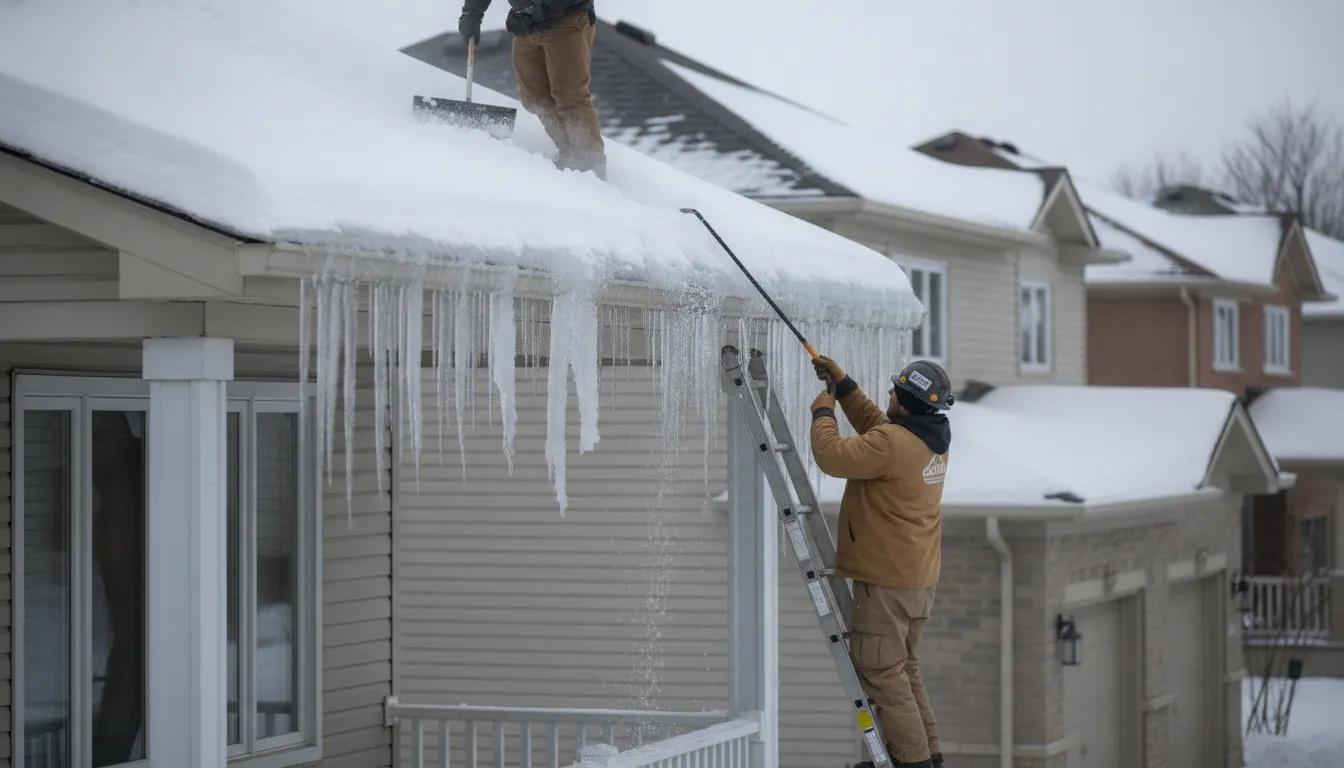
What causes ice dams on GTA roofs?
Ice dams form when heat from your house melts snow on the upper roof, that meltwater runs down to colder eaves and refreezes, creating a lip that traps more water and forces it under shingles and into the attic or walls.
Heat transfer from the attic
Warm air leaking into the attic from the living space — through gaps around plumbing stacks, recessed lights, chimney chases, or poorly sealed attic hatches — raises the roof deck temperature. That localized warming melts snow above heated sections while the overhangs stay cold, setting up the freeze–melt–refreeze cycle.
Insulation gaps and compression
Insulation that’s missing, uneven, compressed by storage, or installed only at joist level allows heat to penetrate to the roof deck. In Toronto’s climate, where heavy snowfalls and freeze–thaw cycles are common, an R-value shortfall or reduced depth over a relatively small area is enough to create a melt pattern.
Poor ventilation
Adequate continuous airflow from eaves/soffits to ridge or powered vents keeps the roof deck near outdoor temperature. Where intake or exhaust vents are blocked or absent, warm attic air builds and raises the roof deck temperature, accelerating melt and ice buildup at the eaves.
Roof geometry and snow
Complex roofs, dormers, valleys, and shallow slopes collect and hold snow differently; where snow is deeper it stores more heat and produces more meltwater. In older Toronto neighborhoods and adjacent parts of York Region and Mississauga, roofs with multiple intersecting planes are especially vulnerable.
Step-by-Step: Ice Damming: Why It Happens on GTA Roofs and How to Stop It
Use these steps to inspect, document, intervene safely, and plan longer-term fixes. Start with safety and documentation before any physical removal.
- 1
Observe and document
Photograph the ice dam from ground level and, if safely possible, from a ladder: eave, gutter, soffit, attic interior, and any interior water stains. Note dates, weather conditions, and any visible attic openings or insulation issues that appear related.
- 2
Protect interior and contain damage
Move furniture and valuables away from exterior walls under the dam and place tarps or buckets beneath active leaks. If water is leaking into living spaces, catch it and dry affected areas quickly to reduce secondary issues like mold.
- 3
Contact your insurer (if damage occurred)
Review your homeowner policy and contact your broker to notify them of damage — provide the photos and dates. Insurance practices and what’s covered vary in Ontario, so ask directly about sudden water damage vs. wear-and-tear exclusions and confirm any deadlines for claims.
- 4
Temporary, safe removal
Safely removing snow from the roof can stop further melting; use a long-handled roof rake from the ground to clear a 2–3 metre strip of snow down to the roof deck above the eaves. Do not attempt to chip ice off the eaves from the roof edge; that risks damaging shingles and injuring people below.
- 5
Address the attic: insulation and air sealing
Have an experienced contractor or energy auditor inspect the attic for gaps, compressed insulation, and ventilation paths. Air-seal common leakage points and add or top-up insulation to meet Ontario recommended levels for your climate zone; this reduces heat transfer that drives ice dams.
- 6
Install long-term roof solutions
Where appropriate, add continuous soffit-to-ridge ventilation, extend eaves insulation, and consider membrane details like ice-and-water shield at eaves when reroofing. In some cases, adding roof heating cables is a temporary measure; prioritize passive fixes first.
Mistakes to Avoid
Avoid quick fixes that damage the roof or make the underlying problem worse. The following are common, costly mistakes and how to prevent them with better, longer-lasting choices.
Chipping ice off the eaves
Using hammers, picks, or roofers’ chisels to break ice off eaves often damages shingles, flashing, and the wood under the roofline. Instead, remove snow from higher up the slope with a roof rake so meltwater drains naturally, and leave stubborn ice to be handled by a professional using heat or safe removal methods.
Relying on roof heating cables alone
Electric heat cables can open channels through ice but don’t stop the root cause — heat loss and poor ventilation. They also consume electricity and can fail; prioritize air sealing and insulation upgrades when possible, using heat cables as an adjunct in problem spots.
Ignoring attic air leaks before reroofing
Replacing shingles without addressing attic leakage and insulation may give short-term cosmetic relief while ice dams return the next winter. When planning a new roof, coordinate with a contractor to inspect and remediate attic gaps so the new roof system performs as intended.
Not documenting damage for claims
Homeowners sometimes skip photographing or recording dates and conditions, which weakens insurance claims. Take clear photos, keep copies of contractor reports, and ask your insurer what they require — Ontario insurers and municipal expectations differ, so verify locally.
What Affects Your Outcome
Several practical factors change how well prevention and repairs work.
Attic air-sealing quality
How thoroughly leaks are found and sealed dictates whether a fix is temporary or permanent; hidden gaps around chimneys and flues are common culprits.
Insulation depth and R-value
Homes with insufficient or compressed insulation will lose more heat upward; adding depth to meet Ontario recommendations improves resistance to heat flow.
Roof shape and materials
Steep slopes shed snow faster; complex roofs with valleys and dormers hold snow and create concentrated melt. Roofing materials and age also change conduction and drainage behavior.
Quality of ventilation
Continuous intake and exhaust airflow is more effective than isolated vents. Blocked soffits or improper vent placement reduces effectiveness.
Contractor experience and scope
A contractor versed in local Toronto climate patterns, building practices, and common attic issues will design a fix that lasts; patchwork without addressing the attic often fails.
Claims documentation and timing
If you have interior damage and wish to involve insurance, timely notice, good photos, and contractor estimates influence claim outcomes; confirm insurer deadlines and requirements for Ontario policies.
Frequently Asked Questions
Exactly what is an ice dam and how does it cause damage?
An ice dam is a ridge of ice at the eaves that traps meltwater behind it. Water backs up under shingles or into soffits and can leak into insulation, walls, and ceilings, leading to stains, rot, and mold if not addressed.
Can I safely remove ice dams myself?
You can safely remove snow from the roof with a long-handled roof rake while standing on the ground; avoid climbing on an icy roof or chipping ice off the eaves. For significant ice build-up, call a professional to avoid injury and roof damage.
Will my homeowner’s insurance cover ice-dam water damage in Ontario?
Coverage varies by policy. Sudden water damage from ice dams is sometimes covered, while damage from lack of maintenance or wear may be excluded; notify your insurer promptly and provide documentation, and verify specific rules with your broker in Toronto or surrounding Peel and York areas.
Are heating cables a good long-term solution?
Heating cables can prevent ice buildup in problem spots but don’t fix attic heat loss or poor ventilation. Use them as a targeted supplement while prioritizing passive solutions like insulation and continuous ventilation.
How much insulation do I need to reduce ice dams in the GTA?
Requirements depend on your home and ceiling assembly; Ontario building recommendations are higher than older homes typically have. An energy auditor or qualified contractor can measure existing R-values and advise on topping up to a level that reduces roof deck warming.
When should I call a contractor versus an energy auditor?
Call an energy auditor first for a blower-door test and infrared scan if you want to diagnose air leakage and insulation performance. If there’s active roof damage or an obvious leak, call a licensed roofer promptly; many homeowners coordinate both for a comprehensive fix.
Free roof & attic inspection for ice-dam risk
Flat Roof Solutions offers a no-cost, no-pressure inspection and written recommendations for Toronto-area homes — verify local permits or insurance steps before work begins.
Get a Free Quote