
Wind and Hail Damage: Handling a Roof Insurance Claim in Ontario
Learn how to document damage, work with your insurer, and get repairs done in Ontario.
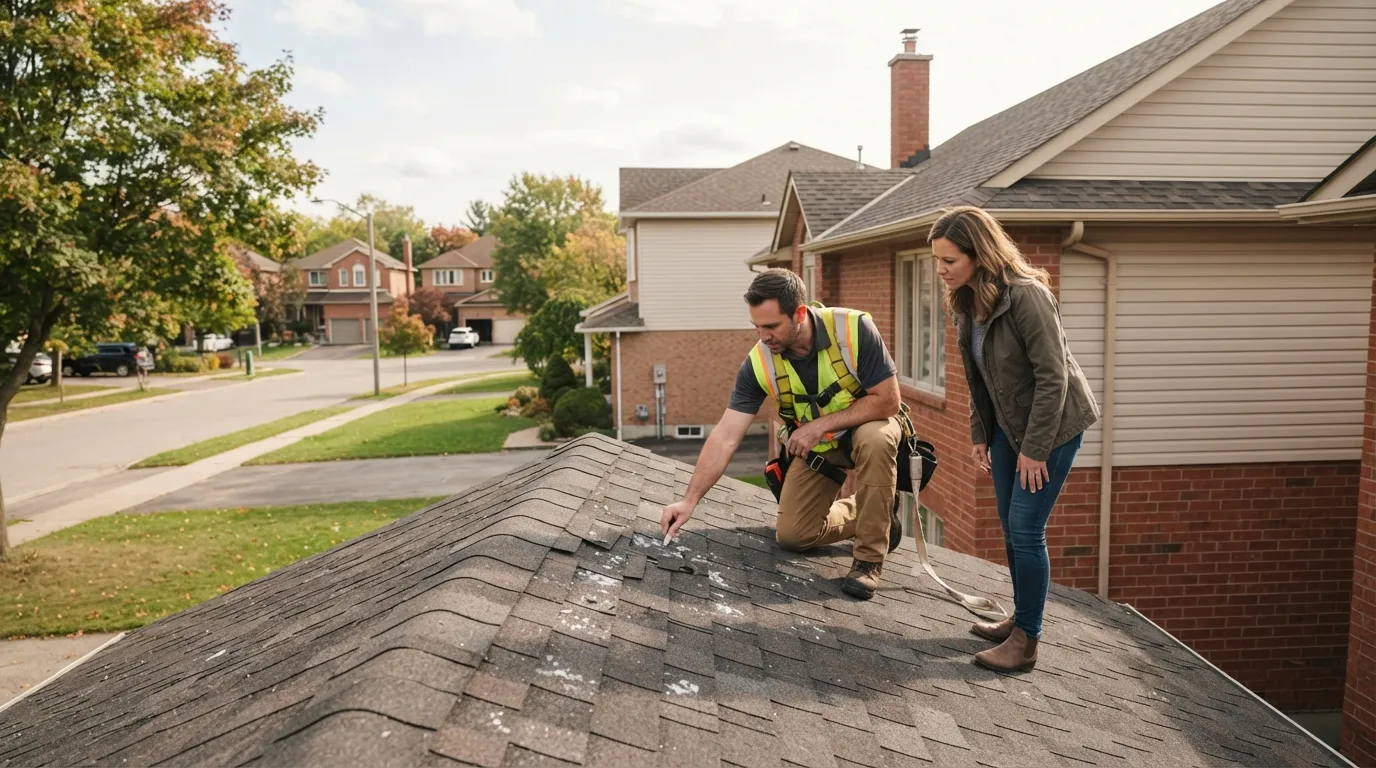
How do I file a roof insurance claim for wind or hail damage in Ontario?
Start by documenting the damage thoroughly, notify your insurer promptly, and get a licensed roofer to provide a written estimate—then cooperate with the adjuster while protecting your home from further loss.
What counts as wind or hail damage
Wind damage includes missing, lifted, or torn shingles and flashing, as well as damaged eaves and soffits. Hail damage often shows as bruising, granule loss, or small divots in shingles, metal, vents and skylights. Both can allow water entry quickly, so timely action matters.
Policy basics to check first
Look for 'peril' language in your homeowner policy—wind and hail are commonly named perils but coverage limits, deductibles, and exclusions vary. Note whether your policy covers 'replacement cost' or 'actual cash value' for roofs; this changes payout calculations, especially for older roofs.
Local-context notes for Toronto homeowners
Toronto, Ontario’s storms can be intense; nearby municipalities like Mississauga and Markham follow similar insurance practices but municipal permit requirements and inspection rules can differ. Always confirm timelines and permit rules with the City of Toronto and your insurer.
Immediate steps that protect your claim
Prevent further damage by applying temporary tarps or boarding where needed, and keep receipts—insurers often reimburse mitigation costs. Avoid permanent repairs until the insurer inspects, unless a tradesperson says delay would cause unsafe conditions; document that advice in writing.
Step-by-Step: Wind and Hail Damage: Handling a Roof Insurance Claim in Ontario
A clear, ordered approach reduces stress and speeds recovery. Follow these practical steps from documenting the damage to completing repairs.
- 1
1) Document the damage right away
Photograph roofs, gutters, siding, vents and landscaping from multiple angles; include a date reference like today’s newspaper or smartphone timestamp. Walk the attic to check for water stains and take interior photos—insurers want clear evidence of both exterior and interior loss.
- 2
2) Review your policy and note deadlines
Find your declarations page to confirm coverages, deductibles, and whether replacement-cost or actual-cash-value applies. Ask your insurer about any claim reporting deadlines and about 'mitigation' reimbursement rules; Ontario insurers typically expect prompt reporting but exact timeframes can vary—verify locally.
- 3
3) Notify your insurer and open a claim
Call your insurer or file the claim online, provide your documentation, and keep the claim number. Be factual when describing damage; avoid guesses about cause or cost—let the adjuster and licensed contractor help with technical evaluation.
- 4
4) Get a licensed roofer’s written estimate
Arrange for a local, licensed roofing contractor to inspect and prepare a written scope and estimate; include photos and a materials list (shingle type, underlayment, flashing, vents). In Ontario, contractors often note whether permits will be required for a full replacement—get that detail up front.
- 5
5) Adjuster inspection and negotiation
The insurer’s adjuster will inspect and prepare an estimate—compare it side-by-side with your contractor’s quote and point out missing items. Keep repairs limited to temporary fixes until you and the insurer agree on scope; ask the adjuster to document any agreed additions in the claim file.
- 6
6) Settlement, permits and repairs
Once the insurer issues an approval, confirm permit requirements with the City of Toronto if a full roof replacement is needed—many municipalities require permits for reroofs. Schedule the contractor, obtain required permits and invoices, and keep all receipts for final claim reconciliation.
Mistakes to Avoid
Small errors early in the process can cost time and money. The following are common pitfalls and practical ways to avoid them when handling wind and hail roof claims.
Waiting too long to report or document
Delaying a claim or failing to photograph damage erodes evidence and can jeopardize reimbursement for mitigation. Document immediately with dated photos and start the claim process as soon as it's safe—insurers expect prompt notification.
Signing away rights or accepting a low estimate
Avoid signing releases or accepting a final payout before you have a contractor’s full scope and permits confirmed. If the insurer offers a quick cash settlement, verify that it covers the actual cost of full repairs (including permit and disposal fees) before you sign.
Hiring the cheapest contractor without vetting
Low bids may skip necessary steps like underlayment replacement or flashing renewal, resulting in leaks later. Choose a licensed local roofer with references, insurance, and written warranties; get an itemized scope listing materials and methods.
Making major repairs before an adjuster sees them
Permanent repairs done before inspection can void portions of the claim because the insurer can’t verify original damage. If immediate repair is needed for safety, document why and keep receipts so the insurer can consider mitigation costs.
What Affects Your Outcome
These factors commonly change the speed, amount, and success of a roof claim.
Timely documentation
Fast, clear photos and written notes make it easier to prove the damage and justify repairs; delays can let wind-driven debris or sun exposure alter evidence.
Quality of contractor estimate
An itemized, local roofer estimate that names materials and methods helps you challenge low adjuster estimates and ensures necessary components aren’t skipped.
Policy coverages and deductible
Whether your policy pays replacement cost or actual cash value, plus the size of your deductible, determines the net payout—older roofs may receive depreciation adjustments.
Local permit and inspection rules
Toronto and nearby municipalities like Mississauga and Markham may require permits for full roof replacements; unpermitted work can complicate final approvals or resale disclosures—verify locally.
Severity and predamage condition
Insurers consider the roof’s pre-loss condition; a well-maintained roof typically gets a stronger claim outcome than one with preexisting deterioration.
Communication with the insurer
Clear, factual communication and organized records speed processing; keep copies of emails, photos, estimates, and the claim number in one folder for easy reference.
Frequently Asked Questions
How soon after a storm should I report wind or hail damage?
Report damage as soon as it is safe to do so—many insurers expect prompt notification. Immediate reporting protects your position and makes it easier to reimburse mitigation costs, though exact policy deadlines vary so check your documents.
Will my claim pay for a full roof replacement?
That depends on your policy (replacement-cost vs actual-cash-value), the roof’s age and condition, and the adjuster’s assessment. Older roofs often receive depreciation; confirm with your insurer which costs are covered and whether depreciation can be recovered after repairs.
Do I need a permit in Toronto to replace my roof?
In many cases a permit is required for a full roof replacement in the City of Toronto, though minor repairs may not need one. Always check with the City of Toronto building department because rules vary by scope and municipality.
Can I hire my own contractor to do the repairs?
Yes—homeowners typically choose a contractor, but the insurer may require competitive estimates or insist on certain line items. Hire a licensed, insured local roofer and provide the insurer a clear, itemized proposal to avoid disputes.
What if the insurer denies my claim?
Ask for the denial in writing and the reason cited; you can provide additional evidence like contractor estimates, photos, or a roof inspection report to dispute it. If needed, contact your broker, seek an independent appraisal (if your policy allows), or get legal advice—laws and procedures vary so verify options in Ontario.
Should I tarp the roof before the adjuster arrives?
If leaks are happening and you need to prevent further water damage, temporary tarping is reasonable—document the condition with photos first. Keep receipts for materials and labor; insurers often reimburse reasonable mitigation expenses when documented.
Free roof inspection for wind & hail damage
Book a no-pressure assessment—we’ll document damage, explain likely permit needs in Toronto, and provide a clear written estimate.
Get a Free Quote